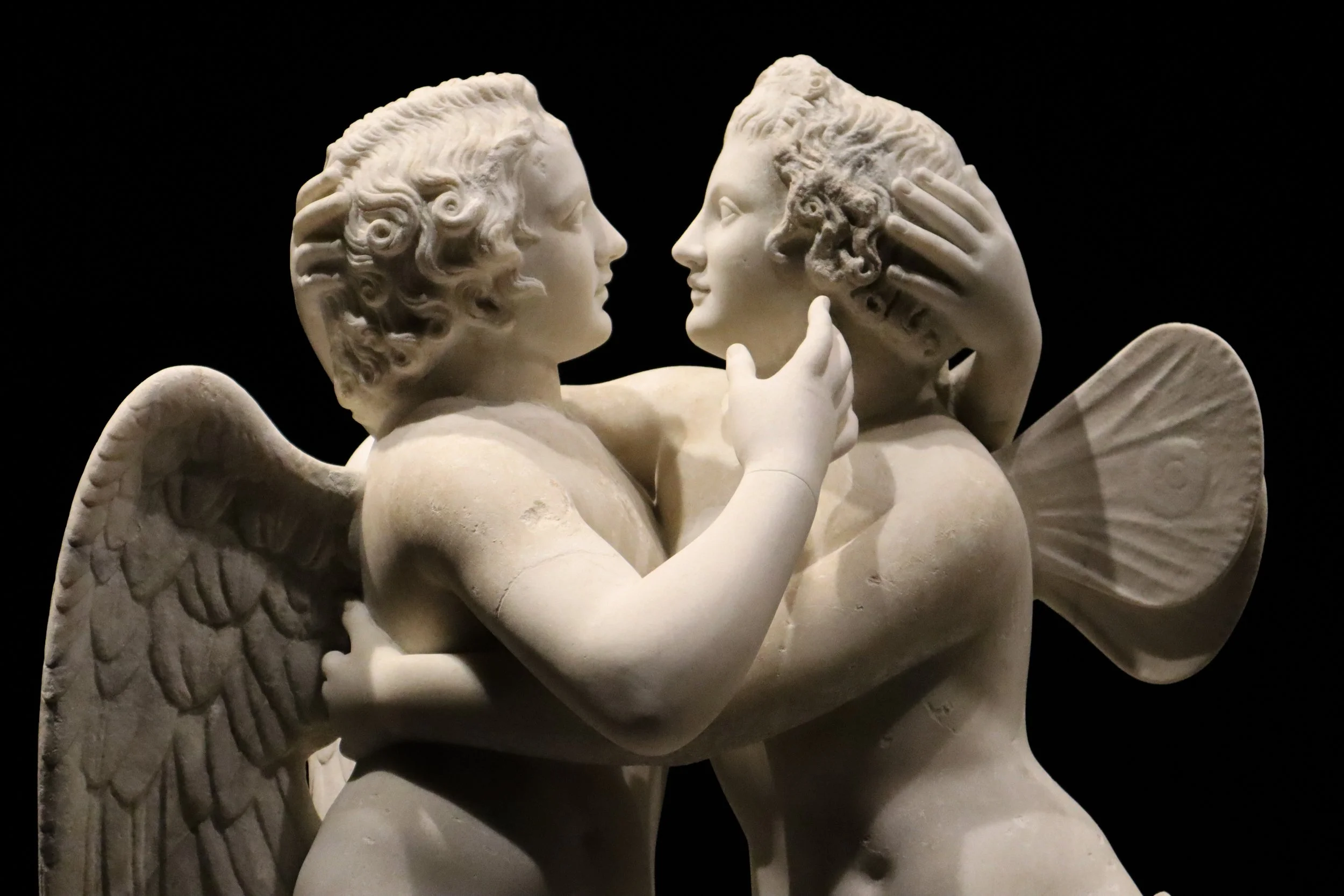
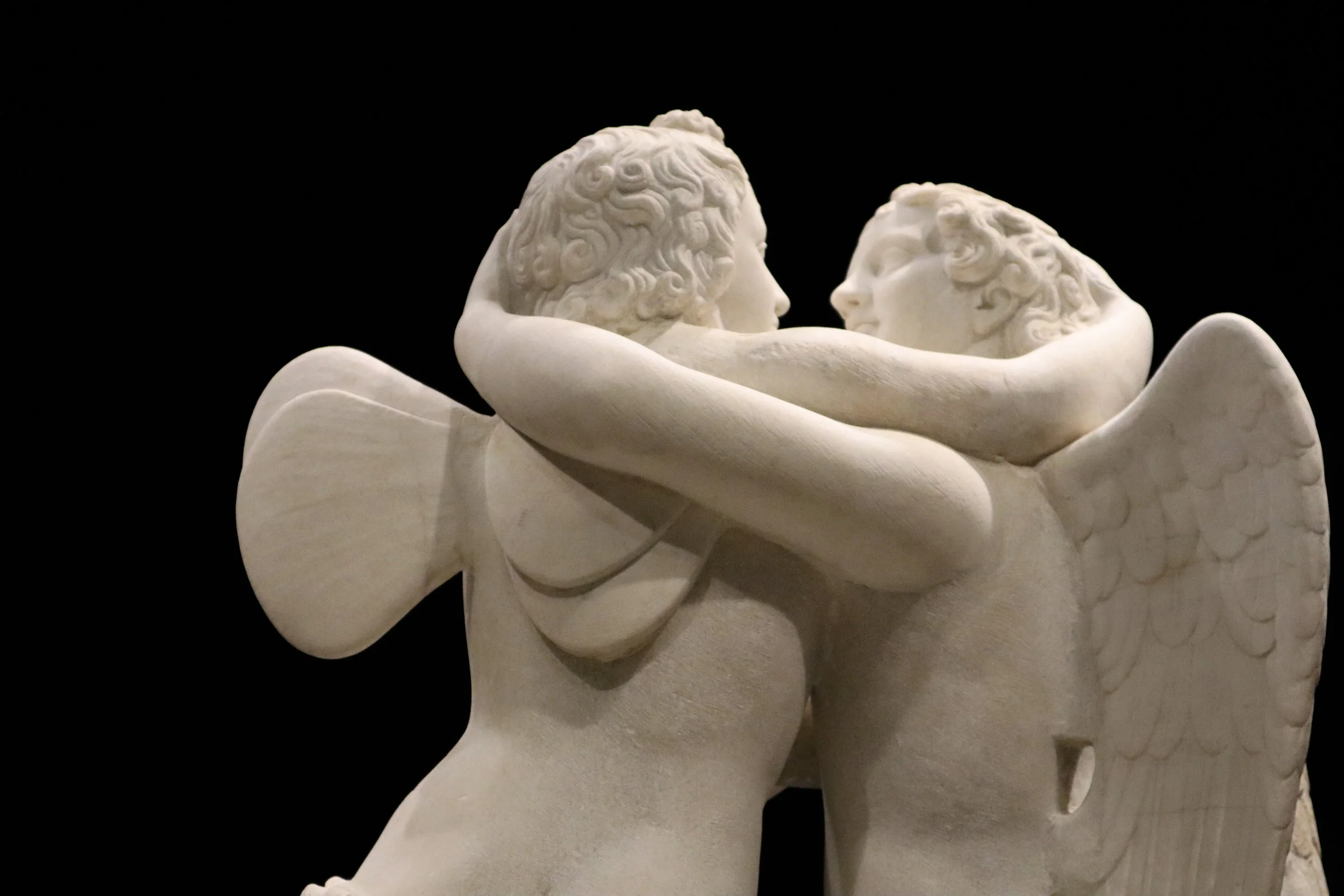
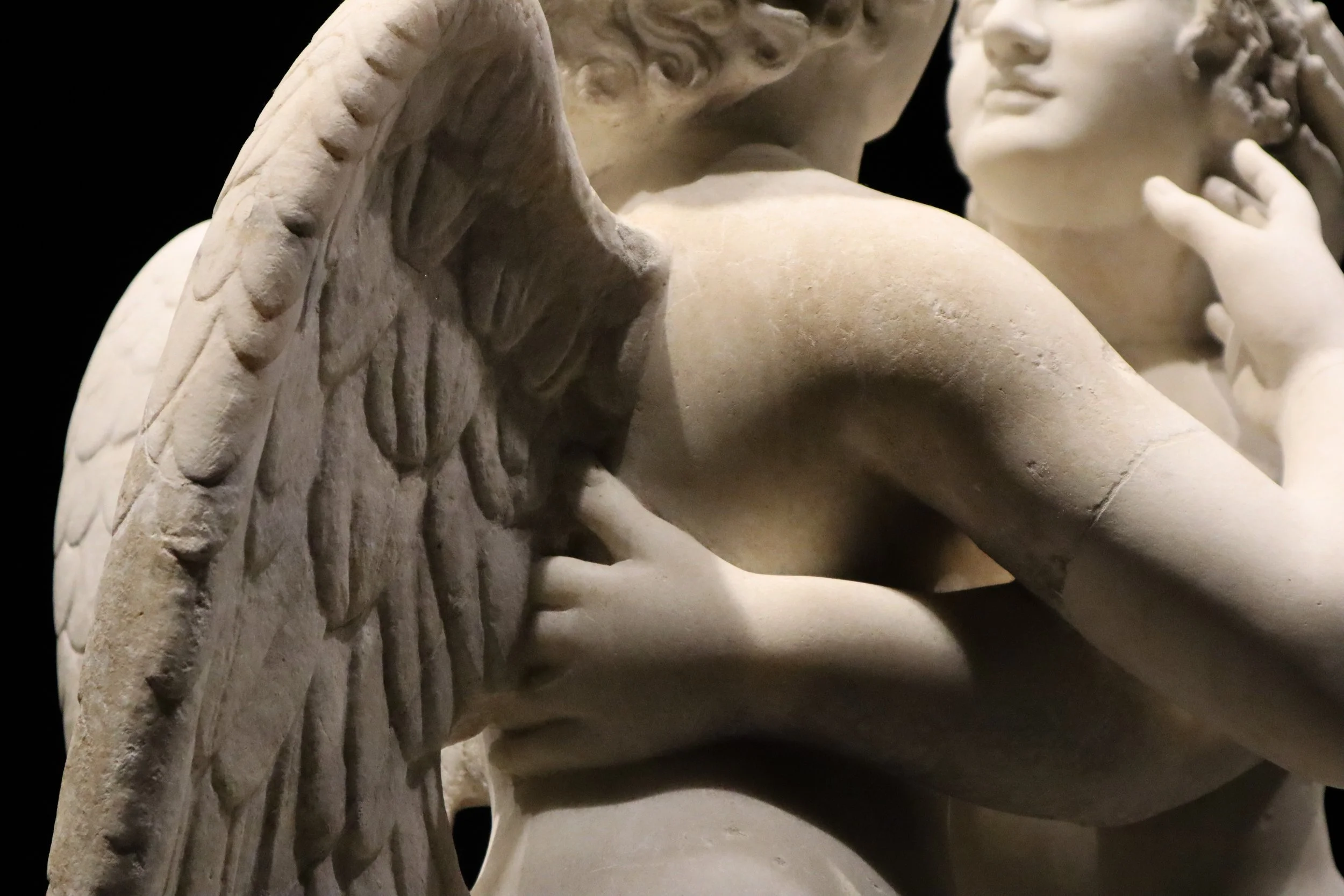
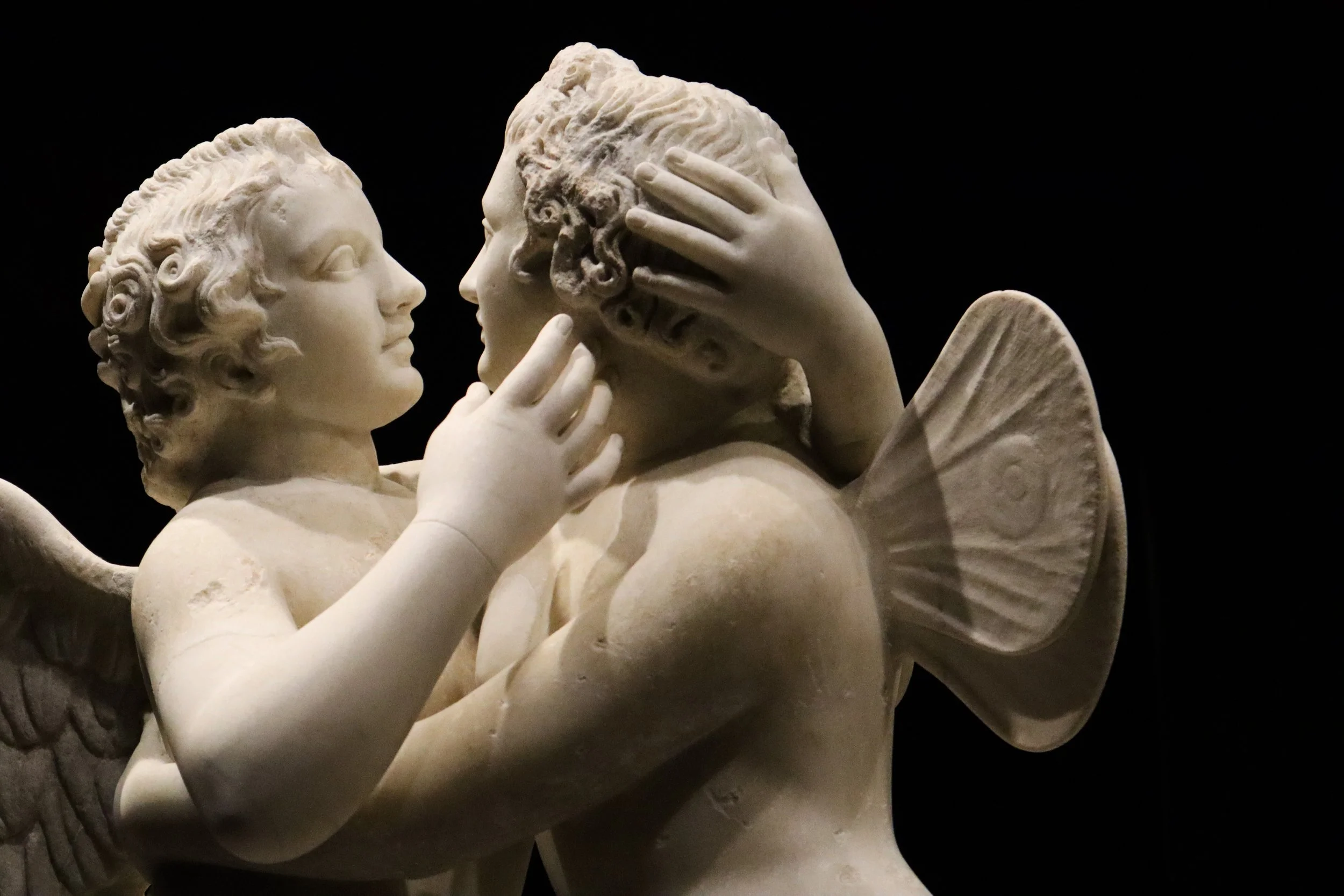
Statue of Cupid and Psyche
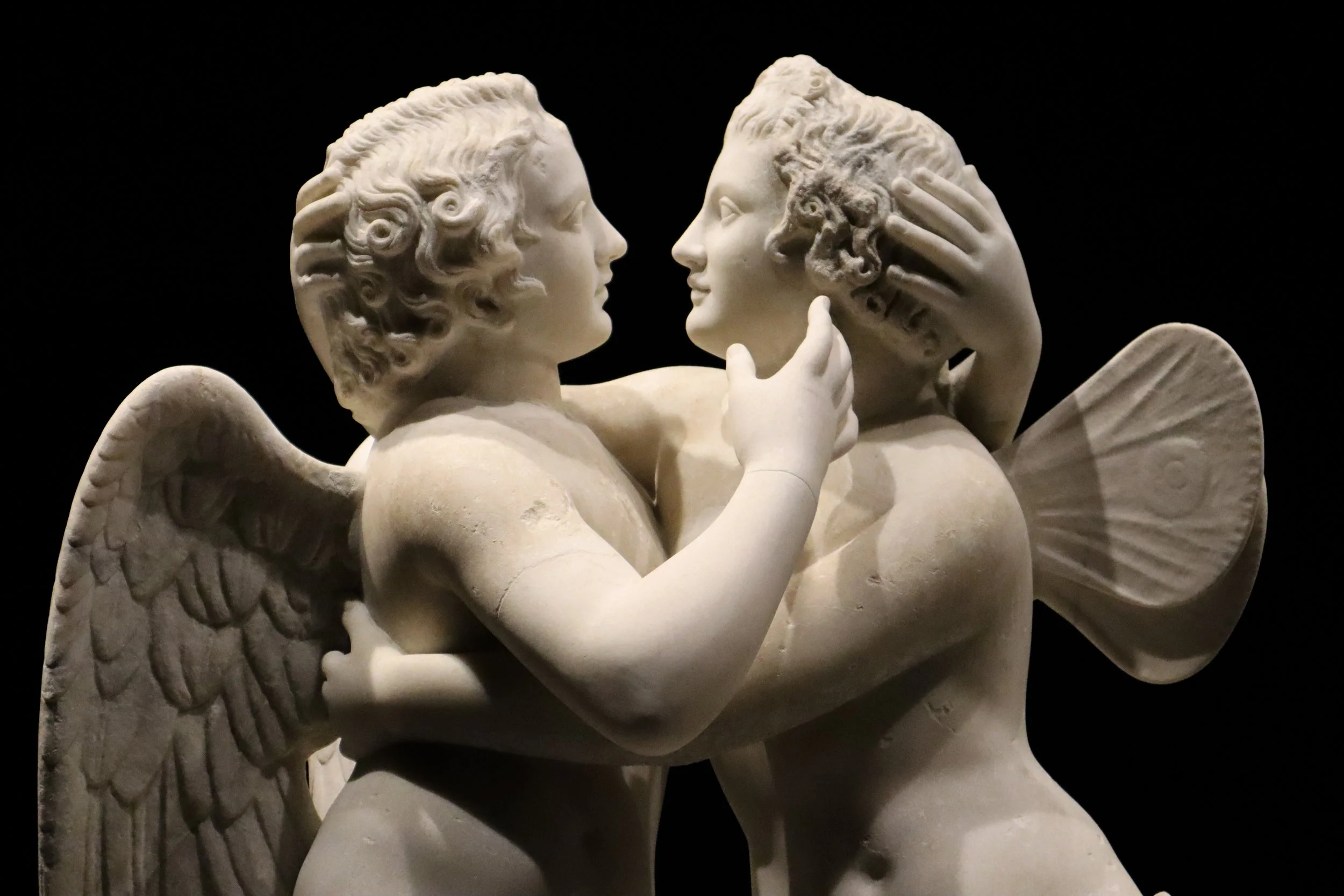
Statue of Cupid and Psyche
Second half of 2nd. c, Roman Imperial Period
Ancient: Greek Marble; Restored; Fine-grained white and Pavonazzetto Marble
130 x 81 x 54 cm
The Torlonia Collection: Masterpieces of Roman Sculpture, Musée des Beaux Arts de Montreal
Fondazione Torlonia
This piece depicts the story of Cupid and Psyche, one of the few romantic myths in Greek and Roman mythology that concludes with a happy ending. The story goes that Psyche, a princess, possessed such immense beauty that mortals abandoned their devotion to Venus (Aphrodite). As revenge, Venus tasks her son, Cupid (Eros), with making Psyche fall in love with a poor man. However, Cupid accidentally strikes himself with the arrow meant for the princess and ends up head over heels in love with her. Thus, they begin a passionate love affair in which Cupid visits Psyche under the cloak of night. Unfortunately, when she finally manages to look at him, he flees. To win him back, Venus sets a series of seemingly impossible challenges for Psyche to complete in order to prove her love. She ultimately accomplishes her mission, wins back her lover, and gains immortality.
This beautiful marble statue was originally created during the Roman Imperial Period, a time spanning from 27 BC to AD 476, beginning after the fall of the Roman Republic and the rise of Augustus as Rome's first emperor. It was politically characterized by the autocratic rule of emperors and was a period of significant territorial expansion, during which the empire came to encompass much of Europe, the eastern Mediterranean, and North Africa, before eventually collapsing under the strain of its immense size and other internal and external pressures. This period left a lasting legacy in the fields of law, engineering, architecture, and language.
This work is part of the Fondazione Torlonia (Torlonia Collection), the largest and most important private collection of ancient Greek and Roman art in the world. It includes busts, sculptures, sarcophagi, and other antiquities, many of which have been carefully restored to resemble their former glory.